🏙️ Metropolitan Naturalist Handbook
You do not need to journey into remote wilderness sanctuaries to witness extraordinary avian ecology. Urban and suburban centers are dynamic biodiversity hotspots teeming with adaptable resident species, nesting raptors, and exhausted seasonal migrants seeking refuge in municipal parks, botanic gardens, and forgotten pocket forests.
- Uncovering micro-oases: cemeteries, green roofs, and retention basins
- How urban birds adapt their songs, foraging, and nesting strategies
- The concrete canyon raptor phenomenon: Peregrine Falcons and Red-tailed Hawks
- Citizen science mapping in metropolitan grid ecosystems
- Practical tactics for navigating urban spaces with binoculars
Table of Contents
- The Paradox of Urban Avian Biodiversity
- Top Metropolitan Micro-Habitats Every Birder Must Explore
- Urban Green Roofs and Elevated Bio-Corridors
- Evolution in the Asphalt: How Urban Birds Adapt and Overcome
- Acoustic Ecology: Singing Above the City Din
- Metropolitan Apex Predators: The Triumph of City Raptors
- Urban Birding Tactics and Social Field Etiquette
- Comparative Table of Urban Habitat Zones
- Field Study Protocol: Conducting a 500-Meter Urban Transect
- Community Action: Transforming Cities into Bird-Safe Sanctuaries
- Frequently Asked Questions (FAQ)
- Conclusion: Reconnecting Concrete with Wilderness
1. The Paradox of Urban Avian Biodiversity
At first glance, a modern metropolis of glass skyscrapers, asphalt parking lots, and relentless vehicular traffic seems an inhospitable wasteland for wild creatures. Yet ecological surveys consistently reveal that cities frequently harbor surprisingly diverse avian populations. Many North American and European cities boast official bird checklists exceeding 250 to 300 distinct species throughout the annual cycle.
This apparent paradox stems from two fundamental realities: geographic positioning and habitat juxtaposition. Human settlements were historically founded along major ecological crossroads—estuaries, river confluences, lakefronts, and fertile valleys. These same geographic landmarks form the primary arterial flyways of migrating birds. When thousands of migrating birds encounter vast metropolitan expanses at dawn, municipal green spaces function as critical ecological “islands,” concentrating birds at densities rarely encountered in contiguous rural forests.
Furthermore, urban areas offer a rich mosaic of micro-habitats within a very compact perimeter. Within a three-mile radius, an urban birder can explore a manicured formal park, a restored riparian wetland basin, an overgrown post-industrial rail spur, a mature conifer-filled cemetery, and open river waterfronts. This incredible habitat diversity packed into dense spatial configurations creates unique opportunities to observe wide varieties of avian families in a single morning outing.
💡 The Urban Island Effect
Because city parks represent isolated emerald islands surrounded by oceans of concrete, migrating songbirds funnel directly into them. A 50-acre city park during May can host more concentrated warbler diversity per acre than a 5,000-acre national forest.
2. Top Metropolitan Micro-Habitats Every Birder Must Explore
To succeed at urban birding, one must develop an eye for non-traditional micro-habitats that mimic wild landscapes. Beyond the well-known central public parks, explore these five metropolitan goldmines:
A. Historic Cemeteries and Memorial Arboretums
Nineteenth-century garden cemeteries are among the finest birding venues in any city. Often designed as lush botanical arboretums, they feature mature native hardwoods, weeping evergreens, ornamental flowering shrubs, and zero vehicular traffic. The quiet, contemplative atmosphere keeps birds undisturbed, making cemeteries prime locations for spotting secretive thrushes, roosting owls, woodpeckers, and migrating warblers.
B. Water Treatment Facilities and Stormwater Retention Basins
Municipal wastewater treatment plants, cooling reservoirs, and drainage basins might lack aesthetic charm, but they are magnets for waterbirds, shorebirds, and swallows. The open aeration tanks and shallow nutrient-rich settling ponds breed staggering quantities of midges and aquatic invertebrates, attracting dabbling ducks, diving grebes, phalaropes, and migrating sandpipers during seasonal passage.
C. Vegetated Rail Corridors and Post-Industrial Greenways
Abandoned railroad embankments, utility right-of-ways, and canal towpaths often revert to dense scrub-shrub brambles. These linear thickets provide vital continuous ecological corridors through dense neighborhoods, sheltering towhees, sparrows, catbirds, and yellowthroats that require dense low-growing tangles.
D. Urban Community Gardens and Allotments
Community gardens are rich patchwork quilts of organic vegetables, companion flowers, compost heaps, and fruit trees. The loose tilled soil exposes earthworms and grubs, while seed heads on sunflowers, cosmos, and thistle attract heavy feeding flocks of goldfinches, siskins, and native sparrows during the autumn months.
3. Urban Green Roofs and Elevated Bio-Corridors
In modern sustainable architecture, green roofs have emerged as unexpected ecological refuges. High above street-level noise, exhaust fumes, and mammalian predators like feral cats and raccoons, vegetated rooftops planted with sedum, native grasses, and drought-tolerant wildflowers provide safe nesting substrates for killdeer, common nighthawks, and gulls.
Furthermore, green roofs act as vital elevated refueling stations for nocturnal songbird migrants flying hundreds of feet above city skylines. Exhausted warblers encountering endless hard roofs find insects, water droplets, and cover on green roofs, allowing them to rest and refuel safely before continuing their flight. Biologists studying rooftop biodiversity have documented hundreds of invertebrate species thriving on green roofs, proving that urban vertical space can be transformed into productive ecological terrain.
4. Evolution in the Asphalt: How Urban Birds Adapt and Overcome
Urban environments represent powerful evolutionary testing grounds. To survive amidst acoustic pollution, artificial light at night (ALAN), and anthropogenic food sources, urban birds demonstrate astonishing behavioral and physiological plasticity.
Foraging innovation is widespread across urban bird species. Corvids (crows and magpies) in Tokyo and Seattle have been documented placing hard-shelled nuts in pedestrian crosswalks, allowing automobile tires to crush the shells, and then safely retrieving the meat when pedestrian signals turn green. House Sparrows learn to hover in front of automatic sliding door motion sensors to gain entry into heated grocery stores and transit centers to feed on dropped pastry crumbs.
Even nesting materials have adapted to the urban grid. House Finches and sparrows frequently incorporate synthetic cigarette filters into their nests; chemical analyses have revealed that residual nicotine in the filters acts as a potent natural pesticide, significantly repelling parasitic mites and ticks from vulnerable nestlings.
5. Acoustic Ecology: Singing Above the City Din
Low-frequency vehicular rumbling, air conditioning units, and industrial hums create severe acoustic masking. Because birds rely on vocalizations for mate attraction and territorial defense, urban noise presents a profound communication barrier.
In response, bioacousticians have documented that urban populations of European Blackbirds, Great Tits, and Song Sparrows sing at measurably higher frequencies than their rural forest counterparts, shifting their songs above the low-frequency rumble of traffic. Other species increase the amplitude of their vocalizations—a reaction known as the Lombard Effect. In extreme noise environments, birds alter their daily schedules: European Robins in central London have shifted their singing hours almost entirely to midnight, when vehicular traffic subsides and ambient sound levels drop dramatically.
6. Metropolitan Apex Predators: The Triumph of City Raptors
Perhaps no urban ornithological story is more inspiring than the dramatic return of birds of prey to metropolitan skylines. Fifty years ago, pesticide toxicity and habitat persecution decimated raptor populations. Today, cities host thriving populations of apex aerial hunters.
The Peregrine Falcon: Concrete Cliff Dwellers
The Peregrine Falcon—the fastest animal on Earth—traditionally nested on sheer wilderness cliff faces. To a peregrine, a 40-story stone skyscraper or suspension bridge tower is simply an optimal, predator-proof artificial cliff. Abundant populations of feral rock pigeons, starlings, and chimney swifts provide an endless, renewable prey base. Today, major cities worldwide host permanent nesting pairs equipped with live-streaming webcams monitored by thousands of adoring citizens.
Red-tailed Hawks and Coopers Hawks in Suburban Parks
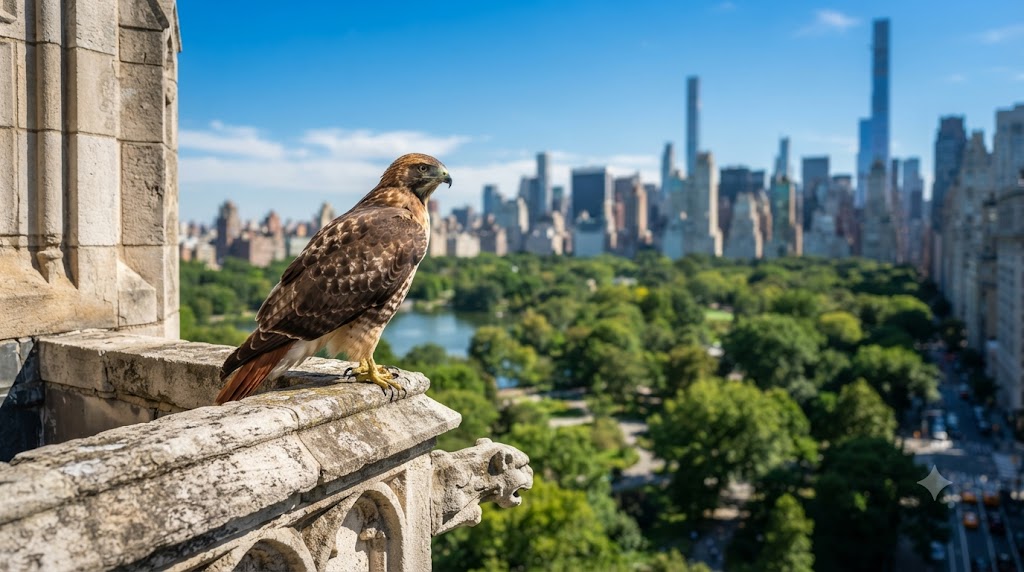
Red-tailed Hawks have conquered urban streetscapes, nesting on high-rise window pediments and church spires, hunting rats and gray squirrels along parkway verges. Simultaneously, Cooper’s Hawks have colonized tree-lined suburban avenues, using residential hedge lines to execute lightning ambushes on backyard songbird concentrations.
7. Urban Birding Tactics and Social Field Etiquette
Birding in urban environments requires social awareness and tact. You are sharing public space with commuters, dog walkers, and families. Follow these practical protocols to ensure a safe, rewarding experience:
- Be Mindful with Optics Near Residential Windows: When scanning trees near apartment buildings or private residences, be conscious of your binocular angle. Raising binoculars toward domestic windows can alarm residents. Keep your body language clearly oriented toward tree canopies.
- Engage Curiously, Not Defensively: Urban birders frequently attract inquiries from curious onlookers asking, “What are you looking at?” Treat these encounters as wonderful opportunities to share local nature. Point out a camouflaged owl or a vibrant tanager—you may create a new conservation advocate on the spot.
- Visit Early on Weekend Mornings: Between 6:00 AM and 8:30 AM on Saturdays and Sundays, urban parks are virtually deserted by runners, off-leash dogs, and maintenance crews, granting pristine observation conditions.
- Maintain Situational Awareness: While looking up into canopies, keep one ear free of headphones and remain mindful of bicycle paths, jogging lanes, and pedestrian traffic.
8. Comparative Table of Urban Habitat Zones
| Urban Habitat Zone | Characteristic Bird Species | Key Ecological Attractions | Optimal Visiting Times |
|---|---|---|---|
| Manicured Public Parks | Robins, Starlings, Grackles, Mallards | Sprawling lawns, scattered ornamental shade trees, open picnic tables | Dawn before human foot traffic peaks |
| Historic Cemeteries | Owls, Woodpeckers, Thrushes, Warblers | Ancient hardwood trees, mature conifer groves, tranquil silence | Mid-morning; quiet afternoon strolls |
| Urban Riverfronts & Canals | Herons, Kingfishers, Cormorants, Gulls | Linear water corridors, bridge pilings, rip-rap shorelines | Early morning; changing tidal phases |
| Rail Corridors & Brownfields | Towhees, Sparrows, Mockingbirds, Kestrels | Dense weedy brambles, chainlink perches, gravel embankments | Sunny mornings as insect activity begins |
| High-Rise Commercial Cores | Peregrine Falcons, Swifts, Chimney Swallows | Artificial cliff structures, swirling insect columns, rooftop gravels | Midday scanning of skyscraper cornices and bridge towers |
9. Field Study Protocol: Conducting a 500-Meter Urban Transect
To systematically understand how avian diversity changes along an urban development gradient, conduct this 500-meter field transect once a month:
- Map a Standardized Route: Select a walking route starting inside a dense commercial corridor, passing through a residential tree-lined street, and ending inside a municipal green park.
- Walk at a Constant Pace: Walk the route over precisely 30 minutes, recording every bird detected visually or acoustically within 25 meters on either side of your path.
- Categorize by Ecological Guild: Group species into ecological guilds: urban exploiters (pigeons, starlings, sparrows), urban adapters (robins, blue jays, cardinals), and urban avoiders (interior forest warblers, ovenbirds).
- Analyze Canopy Cover Impact: You will notice that native bird richness correlates almost perfectly with percentage tree canopy cover and native understory shrubs, reinforcing the critical role of urban forestry.
10. Community Action: Transforming Cities into Bird-Safe Sanctuaries
Despite their resilience, urban birds face deadly anthropogenic hazards. An estimated one billion birds perish annually in North America alone from colliding with reflective glass windows. Urban lighting disorients nocturnal migrants, causing them to circle skyscrapers until they collapse from exhaustion.
Urban birders have a moral obligation to spearhead civic conservation solutions:
- Support Lights Out Initiatives: Advocate for municipal buildings and commercial towers to extinguish non-essential interior and exterior architectural lighting between 11:00 PM and 6:00 AM during peak spring and autumn migration windows.
- Treat Domestic Glass: Apply dot-matrix window films, exterior cords (Zen Wind Curtains), or ultraviolet decals spaced no more than two inches apart to break up external reflections on residential windows.
- Advocate for Native Urban Landscaping: Encourage city parks departments to replace sterile turfgrass lawns with native pollinator meadows and berry-producing shrubs.
- Promote Responsible Pet Ownership: Educate pet owners on the devastating impact of free-roaming domestic cats, which kill an estimated 2.4 billion wild birds each year in the United States alone.
11. Frequently Asked Questions (FAQ)
Q1: Are birds in cities safe to eat from backyard bird feeders?
Yes, provided feeders are regularly maintained. In dense urban neighborhoods, feeders can occasionally spread avian diseases (like salmonellosis or House Finch conjunctivitis) if droppings accumulate. Disinfect seed and suet feeders every two weeks with a 10% bleach solution, rinse thoroughly, and allow them to dry completely before refilling.
Q2: How can I spot an owl roosting in an urban park?
Look and listen for clues left by other birds. Songbirds—such as Blue Jays, crows, and chickadees—will vigorously “mob” a roosting owl by gathering around a dense spruce or evergreen branch while making relentless, agitated scolding calls. Additionally, inspect the ground beneath dense conifers for white fecal splatter (“whitewash”) and regurgitated owl pellets containing rodent bones and fur.
Q3: Is it possible to see rare birds in downtown metropolitan centers?
Absolutely. During severe weather fallouts, rare vagrants blown off course frequently settle in small municipal courtyards, hospital gardens, or rooftop planters. Famous records include rare warblers, hummingbirds, and flycatchers discovered in pocket parks in central London, Chicago, and New York.
Q4: Which bird species is the most common in modern cities?
Globally, the Rock Pigeon (Columba livia), the House Sparrow (Passer domesticus), and the European Starling (Sturnus vulgaris) are the three most ubiquitous urban bird species. All three are exceptionally adaptable cavity nesters capable of thriving on anthropogenic food waste.
Q5: How can apartment dwellers with balconies attract birds?
Install suction-cup window feeders filled with black oil sunflower seed, place shallow saucer bird baths with fresh water, and grow potted flowering native perennials (like salvia or fuchsia for hummingbirds) on balcony railings.
12. Conclusion: Reconnecting Concrete with Wilderness
Urban birdwatching reminds us that nature is not a distant museum exhibit accessible only through long road trips; it is an active, living reality coexisting within our daily routines. When you step out your front door with open eyes and attentive ears, the city becomes a vibrant ecological tapestry where falcons stoop over subways, warblers sing in pocket gardens, and the untamed wild thrives within the modern world.