🕊️ Ethical Field Stewardship Code
As the popularity of birding, wildlife photography, and mobile checklist sharing surges across the globe, the cumulative human footprint on vulnerable avian habitats has never been greater. True field expertise is measured not by the length of a life list or the proximity of a camera lens, but by the profound respect and restraint demonstrated toward wild creatures.
- The biological cost of disturbance: stress hormones and nest abandonment
- Responsible audio playback protocols: when and why to refrain
- Managing sensitive location data on eBird and social media channels
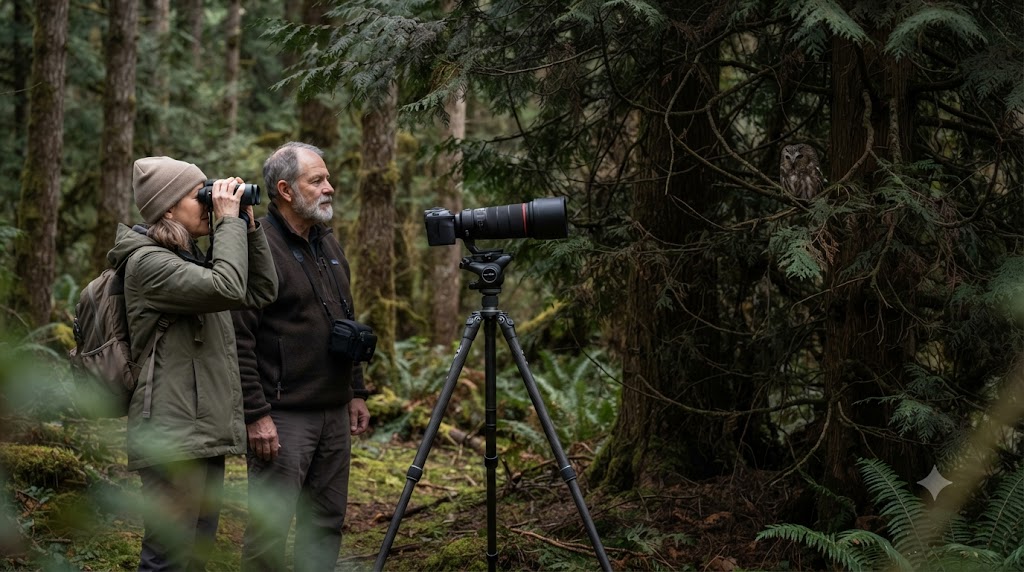
- Ethical wildlife photography: telephoto lenses vs. baiting and flushing
- Habitat stewardship and leaving zero ecological footprint in the field
Table of Contents
- The Moral Foundation of Modern Field Ornithology
- The Physiology of Disturbance: What Happens When Birds Panic
- Nesting Vulnerability and Reproductive Failure Hazards
- The Audio Playback Controversy: Acoustic Ethics in the Digital Age
- Wildlife Photography Ethics: Flash, Baiting, and Perch Manipulation
- Crowds, Rare Bird Alerts, and Social Media Sensitivities
- Habitat Preservation: Trampling Fragile Dunes, Bogs, and Meadows
- Comprehensive Birder Ethical Matrix
- The 5-Step Ethical Field Check for Responsible Birders
- Frequently Asked Questions (FAQ)
- Conclusion: Leaving No Trace Beyond Wonder
1. The Moral Foundation of Modern Field Ornithology
Throughout the eighteenth and nineteenth centuries, early ornithology was largely synonymous with collection—shooting birds to study study-skins in museum drawers. The invention of portable prism binoculars and field identification guides in the early twentieth century ignited a revolutionary paradigm shift: observing the living bird in its natural environment. Today, we stand at another critical ethical frontier. With millions of connected birders equipped with high-powered telephoto cameras, laser rangefinders, and instant notification apps, wildlife is subjected to unprecedented observation pressure.
Ethical birding is founded upon an unwavering premise: **the welfare of the bird and the integrity of its habitat must always supersede any human ambition**. No photograph, no rare bird tick, no competitive big-day count, and no scientific study justifies jeopardizing an animal’s survival, reproductive success, or physiological equilibrium. When an observer approaches a wild bird, they enter the living room of a fragile organism operating on tight metabolic margins.
As birders, we are ambassadors for the natural world. Our collective actions directly shape public perceptions of conservation. By adhering to the highest ethical standards, we demonstrate that reverence for life is the defining characteristic of true field naturalists.
💡 Core Principle
Always ask yourself before taking an action: Am I doing this for the benefit of the bird, or to satisfy my own curiosity and ego? If the answer is the latter, take a step back.
2. The Physiology of Disturbance: What Happens When Birds Panic
Human observers often view flushing a bird—causing it to take flight from a branch or mudflat—as a harmless, minor event. To the bird, however, human intrusion is physiologically indistinguishable from an imminent predator assault. The moment a human approaches past a bird’s tolerance threshold, its sympathetic nervous system initiates a massive surge of corticosterone and adrenaline.
Heart rates escalate dramatically, energetic glucose reserves are dumped into muscle tissue, and feeding or resting abruptly terminates. For a long-distance migrant that has just concluded a 60-hour oceanic crossing with body fat depleted to near zero, every calorie wasted on evasive flight reduces its probability of surviving the next leg of its journey. Repeated disturbances over days or weeks create chronic stress, impairing immune response, reducing resistance to pathogens, and compromising feather development.
In severe freezing winter conditions, flushing a resting bird forces it to break its thermal envelope, expelling precious heated air trapped within down feathers. If forced to fly into sub-zero winds, a small songbird may deplete fat stores needed to survive the upcoming freezing night, leading to overnight hypothermia and death.
3. Nesting Vulnerability and Reproductive Failure Hazards
The breeding season is the absolute most ecologically sensitive window of the avian lifecycle. Eggs and newly hatched nestlings are entirely helpless, incapable of thermoregulation, and utterly reliant on continuous parental incubation and brooding.
The Hidden Perils of Nest Approaching
- Scent Trails and Vegetation Trampling: When photographers or curious birders push through tall grass or marsh reeds to view a ground nest, they crush protective foliage, exposing the nest to aerial predators like crows and hawks. Furthermore, human footpaths create scent highways that mammalian predators—raccoons, foxes, opossums, and domestic cats—follow directly to the clutch.
- Thermal Shock to Eggs and Nestlings: Forcing an incubating parent off a nest for even ten minutes during chilly spring mornings or scorching midday heat can cause lethal thermal shock, killing developing embryos inside the eggshell.
- Premature Fledging (‘Jumping’): Approaching a nest containing older nestlings can provoke panic, causing chicks to jump prematurely from the nest before their wing feathers can support flight. Once scattered on the forest floor, their mortality rate skyrockets.
- Nest Abandonment: Persistent human intrusion will cause sensitive species—such as loons, cranes, and many raptors—to abandon clutches entirely, causing total reproductive failure for the breeding season.
4. The Audio Playback Controversy: Acoustic Ethics in the Digital Age
Smartphone birding apps now place professional sound libraries in every birder’s pocket. Broadcasting recordings of songs or territorial calls to entice secretive species into the open—known as “pishing” or “playback”—has become widespread. However, unchecked playback imposes significant biological tolls.
When an aggressive male bird hears a broadcast of his own species singing inside his territory, he interprets the sound as an active rival challenging his dominance and attempting to steal his mate. The territorial male abandons feeding, ceases incubating, and expends vital metabolic energy singing aggressively, circling the invisible intruder, and patrolling perimeter perimeters. In popular public parks where dozens of visitors broadcast playback at the same spot daily, resident birds suffer continuous hormonal exhaustion.
💡 Playback Rules of Engagement
Never use audio playback in popular public parks, near known nesting territories, or for endangered or threatened species. If conducting authorized scientific surveys, limit playback to two brief 30-second bursts, and discontinue immediately once the bird responds.
5. Wildlife Photography Ethics: Flash, Baiting, and Perch Manipulation
The explosion of digital photography has generated immense competition for dramatic close-up wildlife imagery. Unfortunately, unethical practices have emerged that threaten avian well-being.
A. The Evils of Owl Baiting
One of the most condemned photography practices is the artificial baiting of wintering owls—such as Snowy Owls, Great Gray Owls, and Northern Hawk Owls—using pet store mice tossed onto snow. Baiting habituates wild owls to associate humans and roadways with easy food, causing them to hunt along high-speed highways where they are struck by vehicles. Furthermore, domestic mice can harbor rodenticides and parasites toxic to wild raptors.
B. Artificial Flash and Night Lighting
Direct, close-range artificial flash units fired into the eyes of nocturnal species like owls, potoos, and nightjars can cause temporary retinal bleaching and night blindness, leaving birds unable to hunt or navigate through branches for hours. Respect nocturnal creatures by utilizing ambient moonlight or ethical red-filtered low-lumen torches.
C. Perch Gardening and Vegetation Pruning
Pruning protective leaves or branches to obtain an unobstructed photographic line of sight removes natural camouflage that shields birds and nests from wind, driving rain, and predators. Never alter native vegetation around perches or nesting sites.
6. Crowds, Rare Bird Alerts, and Social Media Sensitivities
When an extraordinary rare vagrant or a roosting boreal owl appears in a populated region, instant internet alerts can summon hundreds of birders within hours. If unmanaged, “rare bird chaser mobs” can trespass on private property, block rural roadways, trample fragile dunes, and relentlessly harass the disoriented bird.
When documenting rare or sensitive birds:
- Delay Public Posting: Consider delaying the public posting of exact GPS coordinates until the bird has successfully moved on, especially if the site is on private land or within fragile dune or bog ecosystems.
- Utilize eBird Sensitivity Flags: Mark sightings of breeding owls, nesting raptors, or endangered species as “Sensitive” on eBird so that public maps suppress exact pinpoints to prevent disturbance.
- Police Your Own Community: If you observe fellow birders or photographers crossing posted barriers or harassing wildlife, speak up politely and remind them of the ethical code.
7. Habitat Preservation: Trampling Fragile Dunes, Bogs, and Meadows
The physical habitat supporting birds is often fragile and slow to recover from trampling. In coastal dune systems, walking off designated boardwalks crushes American beachgrass (Ammophila breviligulata), whose subterranean rhizomes hold sand dunes against ocean storm surges. Destroying beachgrass causes dune blowouts, wiping out critical nesting territories for threatened Piping Plovers and Least Terns.
Similarly, walking through peat bogs or alpine meadows leaves deep ruts in sensitive sphagnum moss layers that take decades to heal. Always stay strictly on marked paths, boardwalks, and trails. If viewing birds across an open meadow or mudflat, remain on the firm edge and utilize a spotting scope rather than marching into the interior.
8. Comprehensive Birder Ethical Matrix
| Situation / Context | Unethical Behavior (Do NOT Do) | Ethical Best Practice |
|---|---|---|
| Active Nesting Sites | Trimming foliage for photos; touching eggs; lingering within 30 feet | Observe from a distance using binoculars or spotting scope; leave immediately if parents show alarm |
| Nocturnal Roosting Owls | Baiting with store-bought mice; repeated direct strobe flashes | Maintain 50+ feet distance; use telephoto lenses and natural ambient lighting only |
| Audio Playback Usage | Continuous looping of territorial songs in high-traffic urban parks | Refrain entirely during breeding season; rely on silent visual observation |
| Tidal Shorebird Flocks | Walking through feeding flocks to photograph birds in flight | Sit motionless on the high-water line and allow incoming tides to push birds naturally toward you |
| Rare Bird Chase Events | Trespassing on private land; parking on sensitive vegetation | Park only in designated areas; respect private property; form single quiet viewing lines |
9. The 5-Step Ethical Field Check for Responsible Birders
Before initiating any observation or photographic setup in the field, run through this mental checklist:
- Check Distance: Can I view this bird comfortably without causing it to raise its head, stop foraging, or stretch its neck in alert posture?
- Check Habitat Integrity: Am I standing on a designated trail or durable surface, or am I crushing sensitive vegetation or creating new erosion paths?
- Check Acoustic Footprint: Are my mobile devices silenced? Have I refrained from artificial audio broadcasts?
- Check Breeding Status: Is this bird carrying nesting material, food for chicks, or performing territorial defense? If so, have I given it maximum space?
- Check Social Responsibility: If sharing this observation online, will it trigger an uncontrollable influx of crowds to an unmanaged or private location?
10. Frequently Asked Questions (FAQ)
Q1: Is ‘pishing’ (making spsshh noises with your lips) harmful to birds?
Soft, occasional pishing mimics avian mobbing or scolding calls and naturally arouses curiosity in chickadees, warblers, and nuthatches. In moderation, it causes minimal distress. However, aggressive, prolonged pishing during active nesting or severe freezing weather forces birds to waste energy and should be avoided.
Q2: How close is ‘too close’ when observing or photographing a bird?
There is no fixed distance in feet because every species and individual has different tolerance thresholds. The definitive sign is behavioral change: if a bird ceases foraging, stretches its neck upward in alarm, shifts its posture defensively, or flushes, you are too close. Let the bird’s natural comfort dictate your distance.
Q3: Can I post photos of bird nests on my social media accounts?
Ethical birding communities strongly advise against posting photos of active nests containing eggs or nestlings, particularly if metadata or geographic location tags are attached. Nest photos encourage copycat photographers to search out and harass active nests, compounding reproductive failure risks.
Q4: Why is tape playback banned in national parks and nature reserves?
National parks and nature reserves prioritize the biological protection of wildlife over human recreation. Tape playback causes physiological stress, disrupts mating displays, and pulls birds away from feeding their young. Many reserves classify playback as wildlife harassment subject to legal fines.
Q5: What should I do if I see another person harassing an owl or rare bird?
Approach calmly and politely explain the negative impact on the bird’s survival. Many people act out of ignorance rather than malice. If the person responds aggressively or continues illegal harassment (such as trespassing or destroying protected nests), report the incident to local park rangers or wildlife conservation officers with photographic documentation of license plates.
11. Conclusion: Leaving No Trace Beyond Wonder
The truest measure of our intimacy with nature is our willingness to honor its boundaries. Wild birds owe us nothing; their existence is a self-justifying miracle of evolutionary history. When we enter their world with humility, silence, and unyielding ethical restraint, we protect the fragile lives we hold dear and ensure that the skies will remain filled with wings and song for generations yet unborn.