Why Birds Mob Predators What Their Group Behavior Can Tell You

WILDLIFE BEHAVIOR OBSERVATORY / FIELD STUDY 04 When Small Birds Challenge Bigger Threats. Discover why birds gather around predators, how alarm calls spread through a flock, and what these dramatic encounters reveal about life in the wild. THE MOBBING RESPONSE 👁️ DETECT 📣 ALERT 🪽 CONFRONT Imagine walking through a quiet woodland when several small … Read more

Birdwatching in Wetlands Where to Look Across Open Water, Reeds, and Mudflats

WETLAND EXPLORER / FIELD GUIDE 03 Every Corner of a Wetland Has a Story. Discover where birds gather, feed, hide, and rest across open water, reedbeds, muddy shorelines, and shallow wetland habitats. 🌊 OPEN WATER 🌾 REEDBEDS 🐦 MUDFLATS Wetlands are among the most interesting environments for birdwatching. A single wetland may contain open lakes, … Read more

Avian Intelligence, Cognition, and Tool Use: Problem Solving in Crows, Jays, and Parrots

🧠 Cognitive Ornithology and Avian Genius For decades, the phrase “bird brain” was used as an insult denoting stupidity and lack of intellect. Today, cognitive neuroscience has completely shattered that myth. Birds—particularly corvids (crows, ravens, jays) and psittacines (parrots)—possess sophisticated cognitive architectures capable of multi-step tool fabrication, facial recognition, episodic memory, causal reasoning, and theory … Read more

Understanding Avian Courtship and Mating Rituals: Lekking, Displays, and Pair Bonding

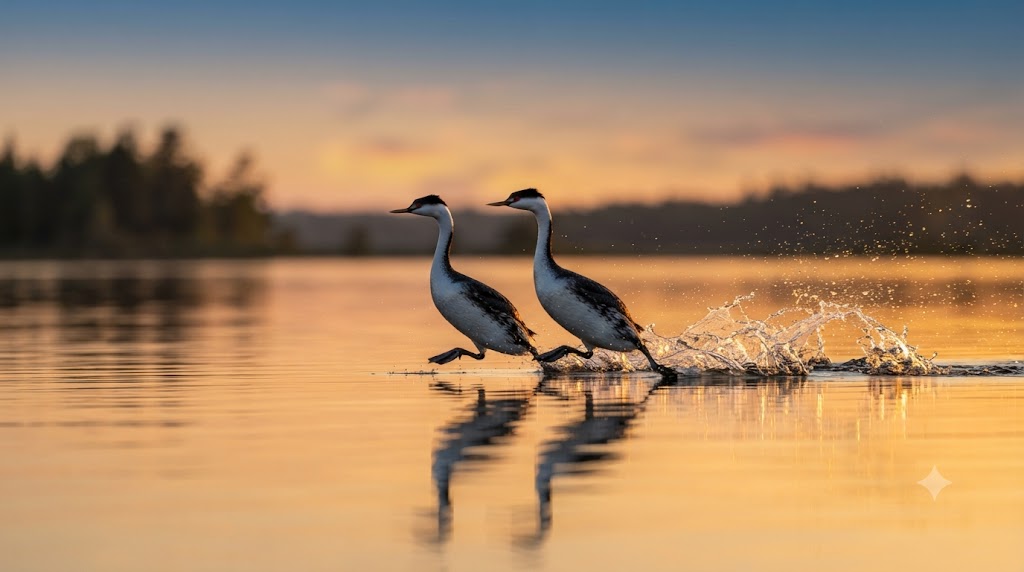
🦚 Evolutionary Ethology Masterclass Avian courtship displays represent some of the most elaborate, dramatic, and aesthetically stunning spectacles in the entire animal kingdom. Driven by the relentless engine of sexual selection, birds have evolved breathtaking nuptial plumages, synchronized aquatic dances, competitive lekking arenas, and architectural courtship bowers. Explore the fascinating evolutionary science governing avian romance. … Read more

The Science of Avian Migration: Magnetic Navigation, Celestial Mapping, and Physiological Marvels

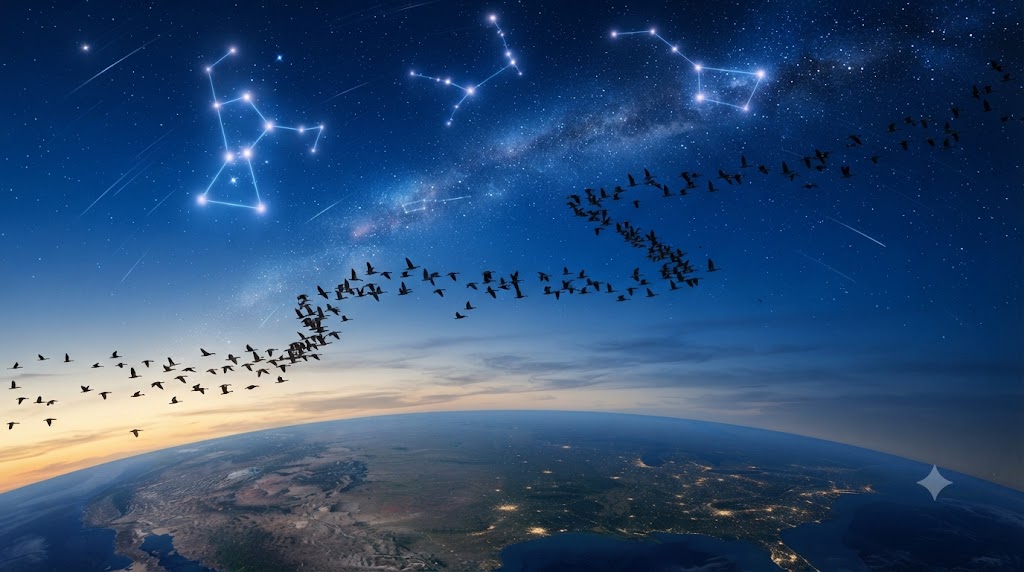
🧭 Avian Navigation and Physiological Ecology How does a tiny, five-month-old songbird weighing barely twelve grams navigate thousands of miles across featureless oceans, dark mountain ranges, and foreign continents to land on the exact same wintering branch its parents used—traveling entirely alone? The biological mechanisms behind avian migration encompass quantum mechanics, magnetic navigation, celestial starcharts, … Read more