🌊 Aquatic Ecosystems and Avian Hydrology
Wetlands are the ecological kidneys of our planet and the undisputed cradles of global waterbird biodiversity. Encompassing freshwater marshes, forested swamps, vernal pools, peat bogs, and coastal estuaries, these hydrologically dynamic environments support a staggering concentration of specialized avian species. Discover how fluctuating water depths, emergent vegetation, and aquatic food chains govern bird distribution.
- Defining wetland types: marshes vs. swamps, bogs, and coastal saltmarshes
- Hydrological niches: dabbling ducks, diving grebes, and stilted stalkers
- The keystone role of emergent vegetation: cattails, bulrushes, and cordgrass
- Threats, restoration ecology, and citizen-led wetland monitoring
Table of Contents
- The Ecological Significance of Wetlands in Avian Biology
- Deconstructing Wetland Typology: From Peatlands to Estuaries
- Zonation and Water Depth: The Vertical Architecture of Wetland Foraging
- Emergent Flora as Structural Keystone: Breeding, Roosting, and Nesting
- Aquatic Food Webs: Plankton Blooms to Apex Piscivores
- Comparative Analysis of Wetland Avian Communities
- Seasonal Waterbird Dynamics: Breeding Scrapes to Winter Flocks
- Wetland Conservation: Combating Fragmentation and Water Diversion
- Step-by-Step Wetland Birding Protocol for Field Naturalists
- Frequently Asked Questions (FAQ)
- Conclusion: Preserving the Living Waterways
1. The Ecological Significance of Wetlands in Avian Biology
Wetlands cover only roughly six percent of the Earth’s terrestrial land surface, yet they support more than forty percent of all global plant and animal species, including thousands of specialized waterbird species. In ornithology, wetlands represent irreplaceable biological hotspots where terrestrial and aquatic ecosystems converge. They provide continuous sources of free water, rich organic detritus, protective vegetation cover, and an extraordinary density of prey organisms ranging from microscopic zooplankton and aquatic insect larvae to amphibians, crustaceans, and forage fish.
For migratory birds traveling along continental flyways, wetlands serve as non-negotiable staging grounds. Without functional wetlands along flyway corridors—such as the Prairie Pothole Region in North America, the Pantanal in South America, or the Camargue in southern Europe—millions of migrating waterfowl, cranes, and waders would suffer catastrophic population collapses due to starvation and exhaustion during transit.
Beyond their wildlife value, wetlands act as natural flood regulators, buffering downstream communities from storm surges, filtering agricultural runoff, sequestering immense quantities of atmospheric carbon in peat soils, and recharging subterranean aquifers. Protecting these hydrologic landscapes is inextricably linked to maintaining planetary avian biodiversity.
💡 Ecosystem Vitality
The Prairie Pothole Region of North America, comprising millions of shallow glaciated depressions across the northern plains, produces between 50% and 70% of the entire continent’s waterfowl population, earning it the title ‘America’s Duck Factory.’
2. Deconstructing Wetland Typology: From Peatlands to Estuaries
To understand where specific waterbirds thrive, an observer must differentiate between five primary wetland categories:
A. Freshwater Marshes
Marshes are non-forested wetlands dominated by herbaceous, soft-stemmed emergent plants such as broadleaf cattails (Typha latifolia), bulrushes (Scirpus), sedges, and common reed. Water levels fluctuate seasonally with rainfall and snowmelt. Freshwater marshes host dense populations of rails (Virginia Rail, Sora), bitterns, Marsh Wrens, Red-winged Blackbirds, and dabbling ducks.
B. Forested Swamps
Swamps are wetlands dominated by woody trees and shrubs, such as bald cypress, water tupelo, silver maple, and buttonbush. These flooded forests feature standing water interspersed with exposed root hummocks and moss-draped branches. Swamps are the specialized strongholds of Prothonotary Warblers (which nest in tree cavities over water), Wood Ducks, Barred Owls, and colonial heron rookeries.
C. Peatlands (Bogs and Fens)
Bogs are characterized by acidic, cold, waterlogged peat soils dominated by thick sphagnum moss carpets, receiving water solely through atmospheric precipitation. Fens are minerotrophic peatlands fed by mineral-rich groundwater springs. These boreal landscapes host cold-adapted specialists including Palm Warblers, Lincoln’s Sparrows, Spruce Grouse, and nesting Sandhill Cranes.
D. Coastal Saltmarshes and Mangrove Estuaries
Where rivers meet the sea, tidal mixing creates dynamic brackish ecosystems. Saltmarshes dominated by cordgrass (Spartina) and tropical mangrove forests provide nurseries for marine fish and host salt-adapted specialists such as Clapper Rails, Saltmarsh Sparrows, and Roseate Spoonbills.
3. Zonation and Water Depth: The Vertical Architecture of Wetland Foraging
In a wetland, water depth dictates avian morphology. Waterbirds exhibit distinct physical adaptations structured around millimeters and inches of water depth:
- Exposed Mud Margins (0 inches): Small plovers and peeps pick seeds, beetles, and surface flies along damp shoreline perimeters.
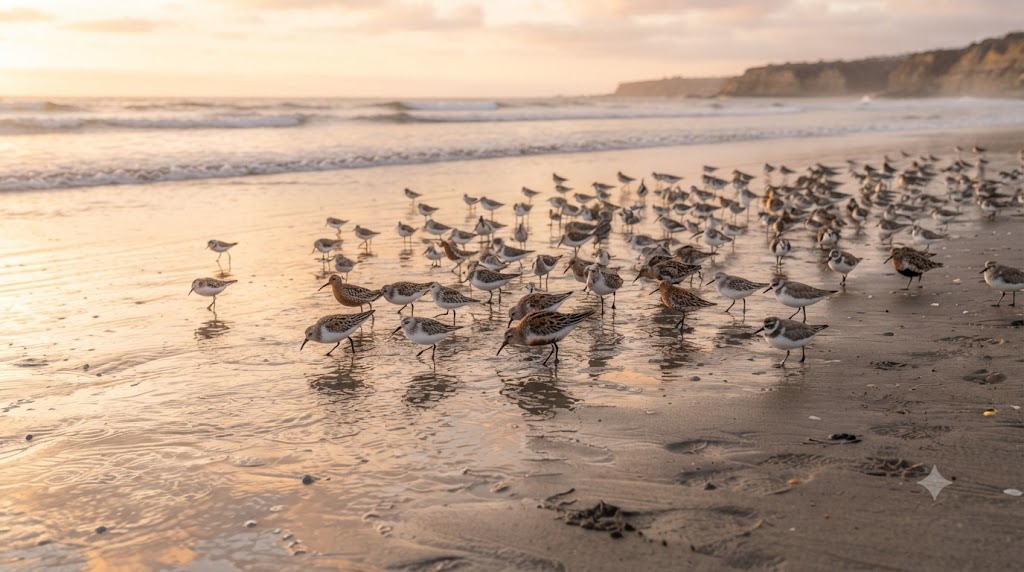
- Shallow Mud Water (1 to 4 inches): Yellowlegs, dowitchers, and sandpipers probe soft sediment without submerging their bellies.
- Ankle to Knee Water (4 to 12 inches): Stilted waders like Great Blue Herons, Little Blue Herons, and Snowy Egrets wade deliberately, hunting minnows and crayfish.
- Surface Water (12 to 24 inches): Dabbling ducks (Mallards, Pintails, Teals) tip up tail-in-the-air (“dabble”) to reach submerged aquatic vegetation and submerged invertebrates.
- Deep Open Water (3 to 15+ feet): Diving ducks (Canvasbacks, Scaup, Mergansers) and grebes dive completely beneath the surface, using webbed or lobed feet to pursue fast-swimming prey in deep water columns.
4. Emergent Flora as Structural Keystone: Breeding, Roosting, and Nesting
Emergent vegetation is the lifeblood of wetland birds. Cattails and bulrushes provide far more than mere scenic backdrop; they are structural architectural pillars:
Nest Anchoring and Wave Dissipation: Marsh Wrens weave intricate, football-shaped spherical nests with side entrances directly onto standing cattail stalks, positioning them above flood lines. Grebes construct floating vegetation rafts anchored to rooted bulrush stems that rise and fall with water levels. The dense reed stems also dissipate wave energy generated by open wind, preventing nests from capsizing.
Predator Deflection: Terrestrial mammalian predators—such as foxes, coyotes, and raccoons—dislike traversing deep, waterlogged mud and dense reed beds. Dense marsh vegetation creates an impenetrable barrier that protects flightless ducklings and nestlings during their vulnerable early weeks.
5. Aquatic Food Webs: Plankton Blooms to Apex Piscivores
The incredible density of birds in wetlands is driven by biological energy flows. The foundation begins with decaying organic detritus—dead leaves, stems, and algae—broken down by billions of bacteria and fungi. This organic soup fuels massive blooms of zooplankton (daphnia, copepods), which in turn support dense populations of freshwater insects (dragonfly nymphs, caddisflies, midge larvae) and amphipods.
Small fish—such as minnows, killifish, and juvenile shad—graze on this invertebrate swarm, becoming prime targets for diving kingfishers, terns, and mergansers. At the pinnacle of the wetland pyramid sit apex piscivores like Ospreys, Bald Eagles, and Great Blue Herons, which consume large carp, pike, and water snakes. When water levels draw down during late summer, millions of trapped fish and invertebrates become concentrated in shallow pools, triggering feeding frenzies involving hundreds of herons, egrets, and storks.
6. Comparative Analysis of Wetland Avian Communities
| Wetland Zone | Characteristic Bird Families | Key Plant Indicators | Diagnostic Foraging Guild |
|---|---|---|---|
| Freshwater Cattail Marsh | Rails, Bitterns, Marsh Wrens, Blackbirds | Broadleaf Cattail, Softstem Bulrush | Cryptic stalkers; reed-clinging gleaners |
| Flooded Bald Cypress Swamp | Wood Ducks, Prothonotary Warblers, Barred Owls | Bald Cypress, Water Tupelo, Spanish Moss | Cavity nesters; bark climbers; ambush predators |
| Sphagnum Peat Bog | Palm Warblers, Lincoln’s Sparrows, Cranes | Sphagnum Moss, Tamarack, Black Spruce | Ground nesters; insectivorous surface gleaners |
| Coastal Intertidal Saltmarsh | Clapper Rails, Seaside Sparrows, Willets | Smooth Cordgrass (Spartina), Saltmeadow Hay | Tidal mud probe-feeders; salt-tolerant nesters |
| Open Lacustrine Deep Water | Canvasbacks, Common Loons, Grebes, Mergansers | Submerged Pondweeds, Wild Celery, Coontail | Deep-diving pursuit piscivores and herbivores |
7. Seasonal Waterbird Dynamics: Breeding Scrapes to Winter Flocks
Wetlands undergo dramatic seasonal transformations. In early spring, northern marshes echo with the unearthly, booming calls of American Bitterns and the whinnying notes of Soras establishing territorial claims. Pairs of Canvasbacks, Redheads, and Mallards perform head-pumping courtship displays across open water leads.
By mid-summer, wetlands become teeming nurseries. Broods of downy ducklings paddle through duckweed under the vigilant gaze of hen ducks. Juvenile herons practice awkward lunges along shoreline mud. In late autumn, these same wetlands transform into vast resting depots hosting tens of thousands of migrating northern waterfowl. Flocks of Snow Geese, Tundra Swans, and Northern Pintails settle in shimmering rafts across open bays, their calls filling the frosty air.
8. Wetland Conservation: Combating Fragmentation and Water Diversion
Historically, human societies viewed wetlands as useless “swamplands” that needed to be drained, diked, and plowed for agriculture or filled for real estate. In North America and Europe, more than fifty percent of original wetland acreage has been destroyed over the past two centuries.
Today, wetlands face acute threats from agricultural nutrient runoff (which causes toxic algal blooms and hypoxic dead zones), upstream water diversions for municipal irrigation, and rising sea levels that submerge coastal marshes against hardened seawalls—a phenomenon known as “coastal squeeze.” Modern wetland restoration initiatives—such as the federal Wetland Reserve Program (WRP) and international agreements under the Ramsar Convention—are successfully restoring thousands of acres by removing drainage tiles, breaching levees, and restoring natural hydrological pulse regimes.
9. Step-by-Step Wetland Birding Protocol for Field Naturalists
To maximize sightings in a wetland environment while preserving wildlife comfort:
- Arrive at First Light: Wetland birds are most vocally active during the thirty minutes surrounding dawn. Rails, gallinules, and bitterns frequently step out onto open mud margins before morning sun creates glare.
- Utilize Wildlife Blinds and Boardwalks: Avoid wading directly into the water, which churns up silt and destroys underwater vegetation. Utilize permanent boardwalks and observation blinds that obscure your silhouette.
- Scan from Far to Near: Open wetlands offer vast horizons. Use a spotting scope to scan distant open water for diving ducks before sweeping the near emergent reed edges for secretive rails.
- Listen for Reedy Vocalizations: Learn the distinctive acoustic signatures: the metallic clicking of Black Rails, the laugh of a Common Gallinule, and the machine-gun clatter of a King Rail.
10. Frequently Asked Questions (FAQ)
Q1: Why do wetland birds have such long legs?
Elongated tarsal and tibial leg bones allow wading birds—such as herons, egrets, and stilts—to walk through varying depths of water without submerging their feathers or causing excessive acoustic water disturbance, allowing them to stealthily approach aquatic prey.
Q2: How do diving ducks stay dry while swimming underwater?
Diving ducks possess exceptionally dense plumage coated with waterproof oils produced by the uropygial (preen) gland located at the base of the tail. Furthermore, microscopic barbules on their contour feathers interlock tightly to trap a dense layer of insulating air against their skin, preventing water penetration and hypothermia.
Q3: What is the difference between a swamp and a marsh?
The fundamental distinction is vegetation: marshes are dominated by herbaceous plants (grasses, cattails, sedges, reeds) without trees, whereas swamps are flooded wetlands dominated by woody trees and shrubs (bald cypress, red maples, tupelos).
Q4: Can birders visit managed waterfowl impoundments?
Yes. State wildlife management areas and national wildlife refuges frequently manage water impoundments with water control structures to benefit migrating birds. Check local regulations regarding seasonal closures during autumn waterfowl hunting seasons.
Q5: What is the best way to spot a secretive rail?
The most reliable method is to sit motionless along a boardwalk overlooking an open muddy channel in a marsh during an outgoing tide or early morning. Rails prefer to forage along the narrow transitional edge where cattails meet shallow water.
11. Conclusion: Preserving the Living Waterways
Wetlands are the shimmering veins of our planet, sustaining life in its most vibrant and diverse expressions. When we stand beside a mist-shrouded marsh at sunrise, listening to the resonant trumpeting of swans and the quiet rustle of rails among the reeds, we are reminded of the profound interconnectedness of water, land, and sky. By championing wetland conservation, we ensure that these primordial aquatic realms continue to echo with avian life for centuries to come.
Ecological Case Studies: Global Ramsar Wetland Strongholds
To understand the global scale of wetland dependence, examine these four critical avian sanctuaries designated under the international Ramsar Convention:
- The Pantanal (Brazil, Bolivia, Paraguay): The world’s largest tropical freshwater wetland, covering over 42 million acres. During the annual flood pulse, vast savannas submerge under water, creating feeding grounds for staggering colonies of Jabiru Storks, Roseate Spoonbills, and endangered Hyacinth Macaws.
- The Everglades (Florida, USA): The legendary ‘River of Grass’ characterized by a slow-moving, shallow sheet of fresh water flowing through sawgrass marshes and mangrove fringes. It supports critical breeding colonies of Wood Storks, Snail Kites (which feed exclusively on native apple snails), and White Ibises.
- The Wadden Sea (Netherlands, Germany, Denmark): The largest unbroken intertidal mudflat and barrier island system in the world. Over 12 million shorebirds and waterfowl rely on the Wadden Sea during their annual migration along the East Atlantic Flyway.
- The Okavango Delta (Botswana): An inland delta where river waters spread across the Kalahari Desert sands, sustaining Pel’s Fishing Owls, African Fish Eagles, and hundreds of breeding waterbird species.
Hydrological Management and Seasonal Invertebrate Pulses
In managed wildlife refuges, biologists use adjustable water-control structures (stoplog flumes) to mimic historic seasonal hydrologic cycles. When water levels are maintained at uniform high depths year-round, wetlands become biological dead zones for shorebirds and dabblers because seeds cannot germinate and wading birds cannot reach benthic sediments.
By executing deliberate spring drawdowns (lowering water depths to 2–4 inches), sunshine warms exposed mudflats, triggering explosive blooms of chironomid midges, water boatmen, and smartweed plants. These nutrient pulses provide thousands of pounds of high-energy biomass exactly when migrating broods and weary travelers arrive.